
Version 20.0 focuses on the shopping experience. It brings product reviews with photos and star ratings, gift vouchers, additional services sold with products, expected delivery dates right on the product detail page, unified SEO attributes for every page, a redesigned storefront with better accessibility, a more comfortable administration, and dozens of security and performance improvements across the backend and storefront.
New features
Product reviews
Customers can now rate products with 1–5 stars and an optional text, either directly on the product detail page or via a “Write a review” link in their order detail (it works for guest customers too). Reviews linked to an eligible order are marked as a verified purchase; reviews can be published anonymously, and up to 5 photos can be attached. Every review waits for approval in a new multi-domain Product reviews section of the administration, where moderators approve it with a single click, reject it with a reason, or edit inappropriate content. Every edit is stored in the review history for auditing.
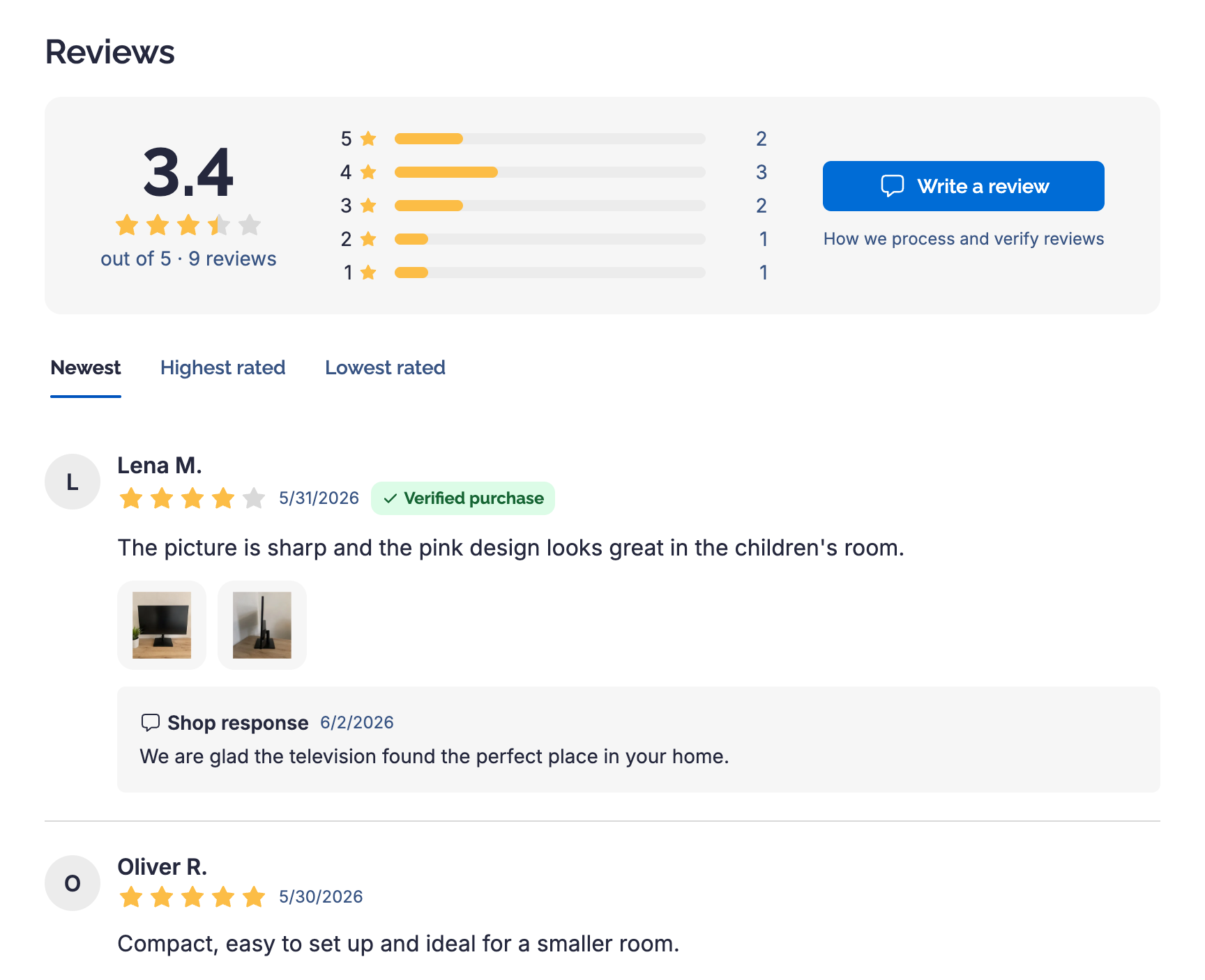
Rating summary, verified purchase badge, review photos and shop response
The average rating and review count are displayed on product tiles in listings, search results, and carousels. Product structured data now includes the aggregate rating and the newest reviews, making products eligible for star snippets in search results, and the GTM data layer carries reviewCount and reviewValue. The whole feature can be enabled per domain.
Gift vouchers
Shops can now sell gift vouchers as new product types – electronic and printed, including variants. Once an order is paid, a unique code is generated for each electronic voucher and delivered to the customer by email with a PDF voucher attached. Vouchers are redeemed in the cart through the same field as promo codes and act as a form of payment, not a discount – order totals and VAT stay intact; only the remaining amount is charged, and fully covered orders skip the payment gateway entirely. Carts containing only electronic vouchers skip the transport selection. Administrators get a gift voucher overview with search, manual cancellation, and PDF download.
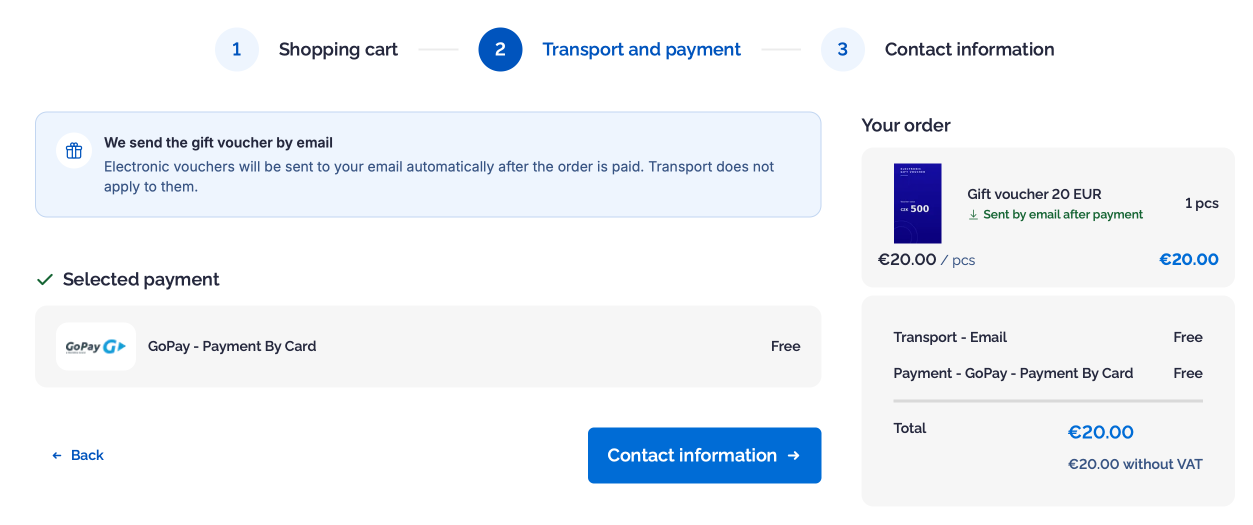
Additional services offered with products (#4716)
Merchants can offer additional services such as installation, extended warranty, or gift wrapping alongside their products. Services are managed in a codebook with a per-domain price, VAT rule, visibility, and an optional extension of the delivery time, and are assigned to individual products. Customers pick them with checkboxes on the product detail page, in the add-to-cart popup, or in the cart. Each chosen service becomes a separate order item linked to its product, and services are also propagated to Heureka, Zboží.cz, Google, and Mergado feeds.
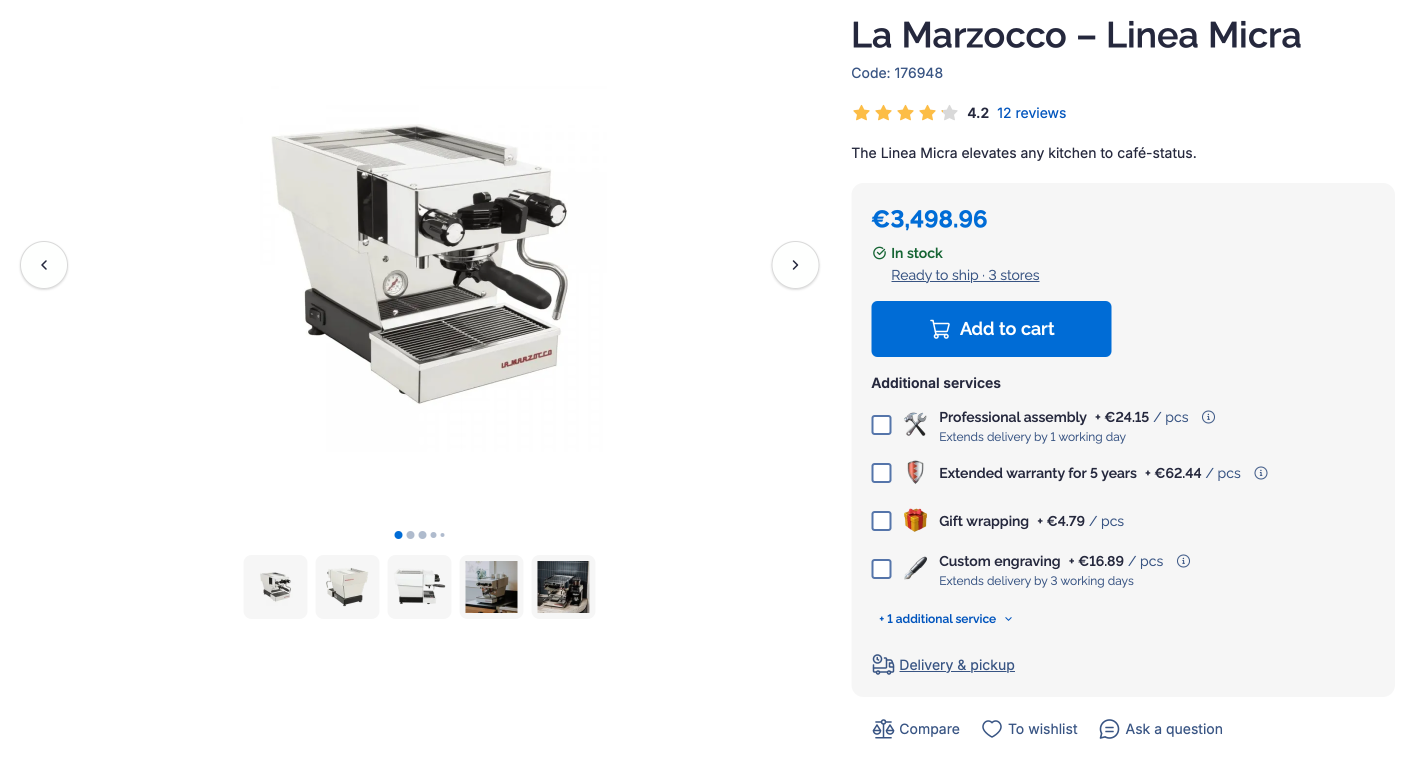
Expected restocking and delivery dates
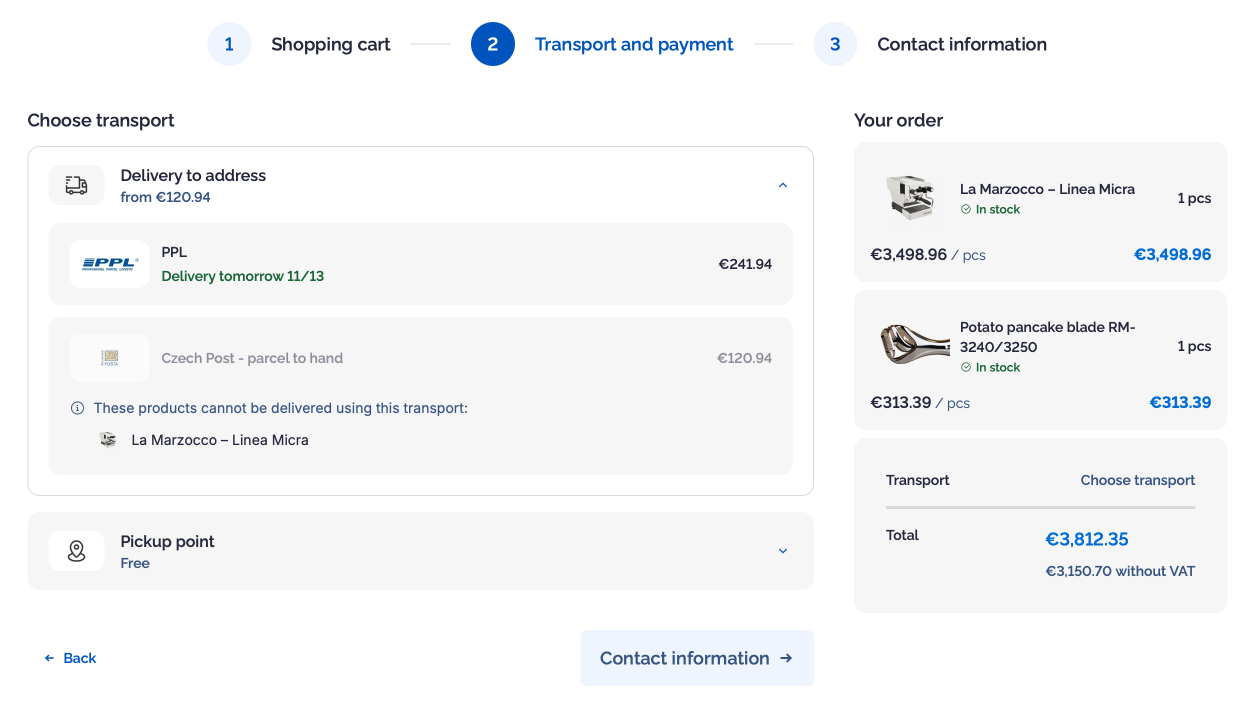
Instead of a discouraging “Out of stock”, customers now see when the product will be available again – administrators can set an expected restocking date, which is displayed in listings, on the product detail, in the cart, and is also sent to product feeds and GTM. The checkout shows an expected delivery date for each transport, calculated from product availability and the transport configuration (weekends, public holidays, closed days), including a per-store date for personal pickup. Customers can also open the delivery options directly from the product detail before adding the product to the cart.
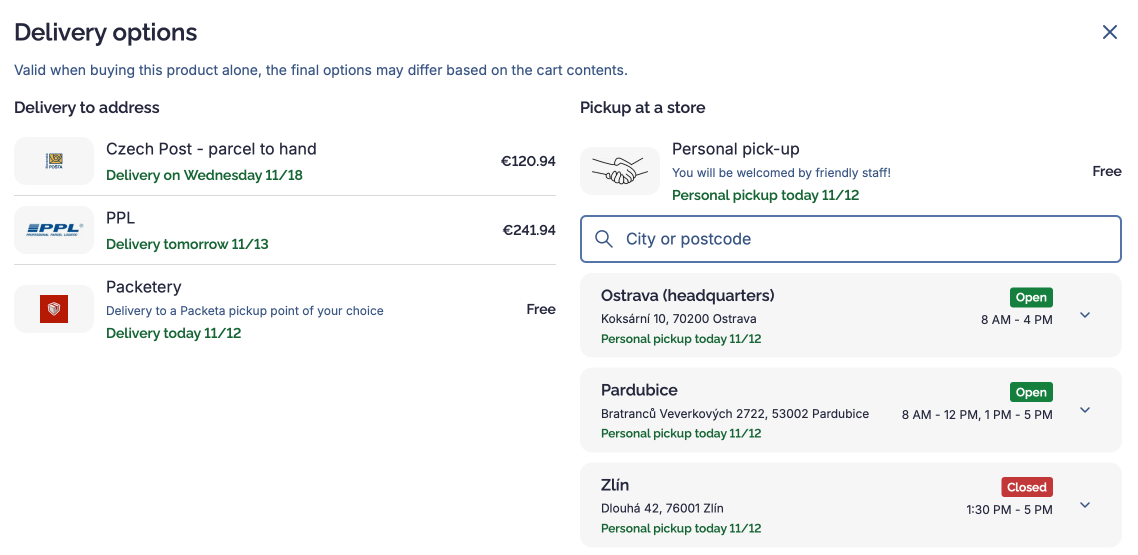
Smoother checkout and order flow
Transport methods can now be organized into groups, so the checkout presents delivery to an address and pickup points in clear, grouped cards. Products such as weapons can be restricted to personal pickup only – when they are in the cart, other delivery methods are disabled with an explanation, and the restriction is enforced on the server as well. The order confirmation and the return from the payment gateway have been unified into a single page showing the current payment state, and customers who take longer to pay now land on a reassuring informational page instead of an error.
Questions about products (#4661)
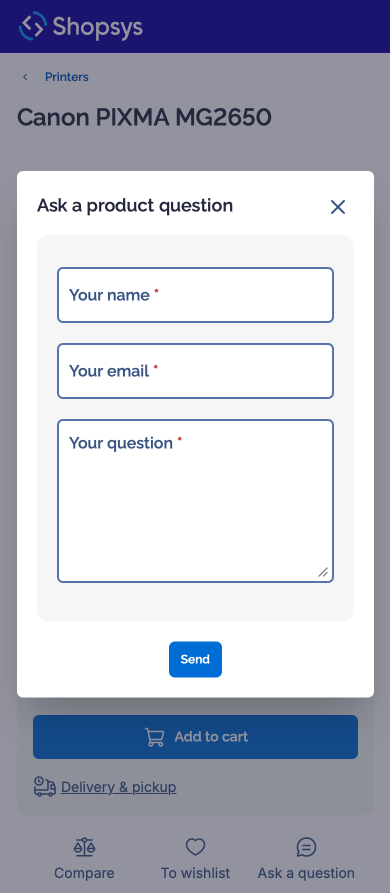
A new “Ask a question” button on the product detail page opens a short form, so customers can ask about a specific product without leaving the shop. The shop operator receives the question by email with the customer’s address set as the reply-to, and the customer gets a confirmation.
Richer blog articles
Blog articles can now be attributed to an author with a photo, job title, and description – shown in the article header, in an author box below the content, and in the structured data for search engines. Articles with headings get a sticky table of contents with shareable section links, and an article with a single embedded product displays it as a prominent hero card.

SEO and marketing
Unified SEO attributes for every page (#4845)
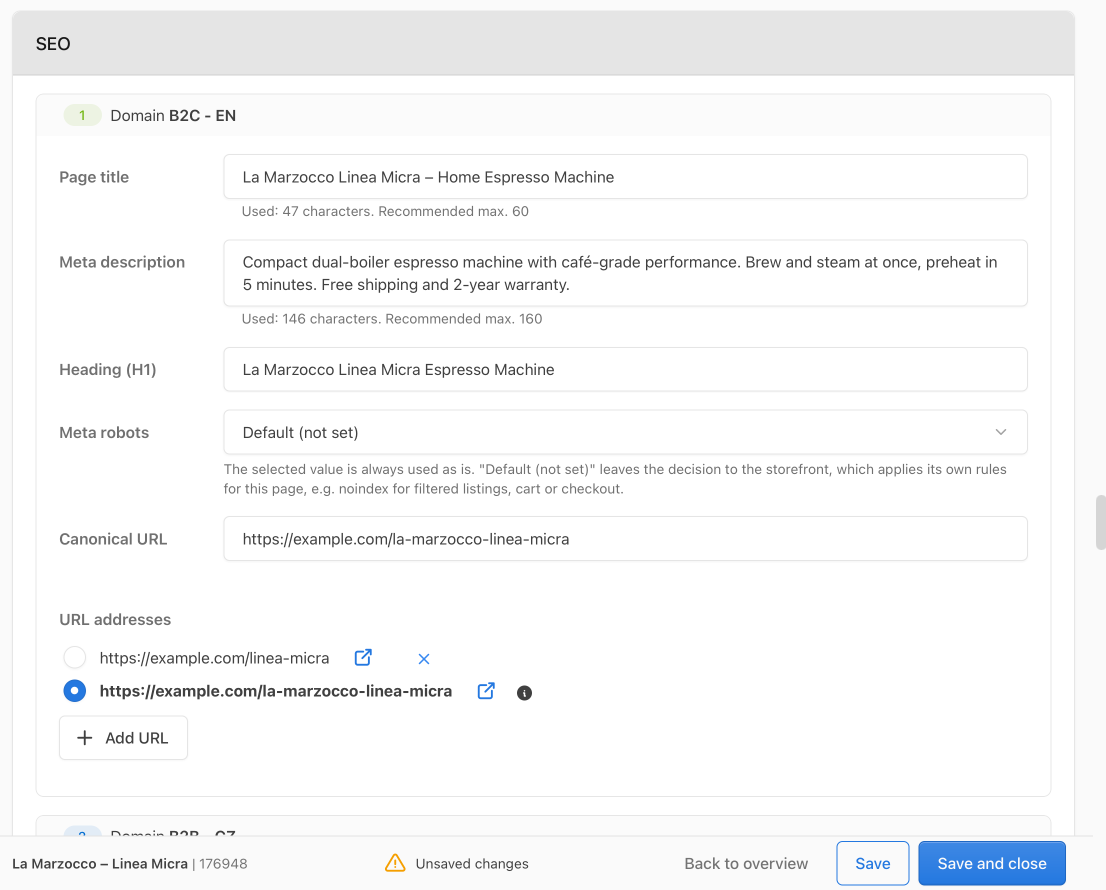
Every storefront page now works with the same set of SEO attributes: page title, meta description, H1 heading, meta robots, and canonical URL. Administrators edit them in one unified SEO card per domain for all entities, now including stores and flags. Pages marked noindex or pointing to another canonical URL are automatically left out of the sitemap. SEO pages for static storefront pages (cart, search, customer section…) are created automatically, so their text can be managed in the administration as well.
Structured data and social sharing
Search engines now receive complete structured data – organization details with a logo configurable per domain, products with all images, EAN codes, price ranges and ratings, and articles with publication dates and author information. Pages shared on social networks get complete Open Graph and Twitter data, including a properly resized sharing image picked from the page, its entity, or the organization logo.
Google Tag Manager
The GTM data layer keeps growing. The store owner can now also track:
Design and appearance
Redesigned storefront
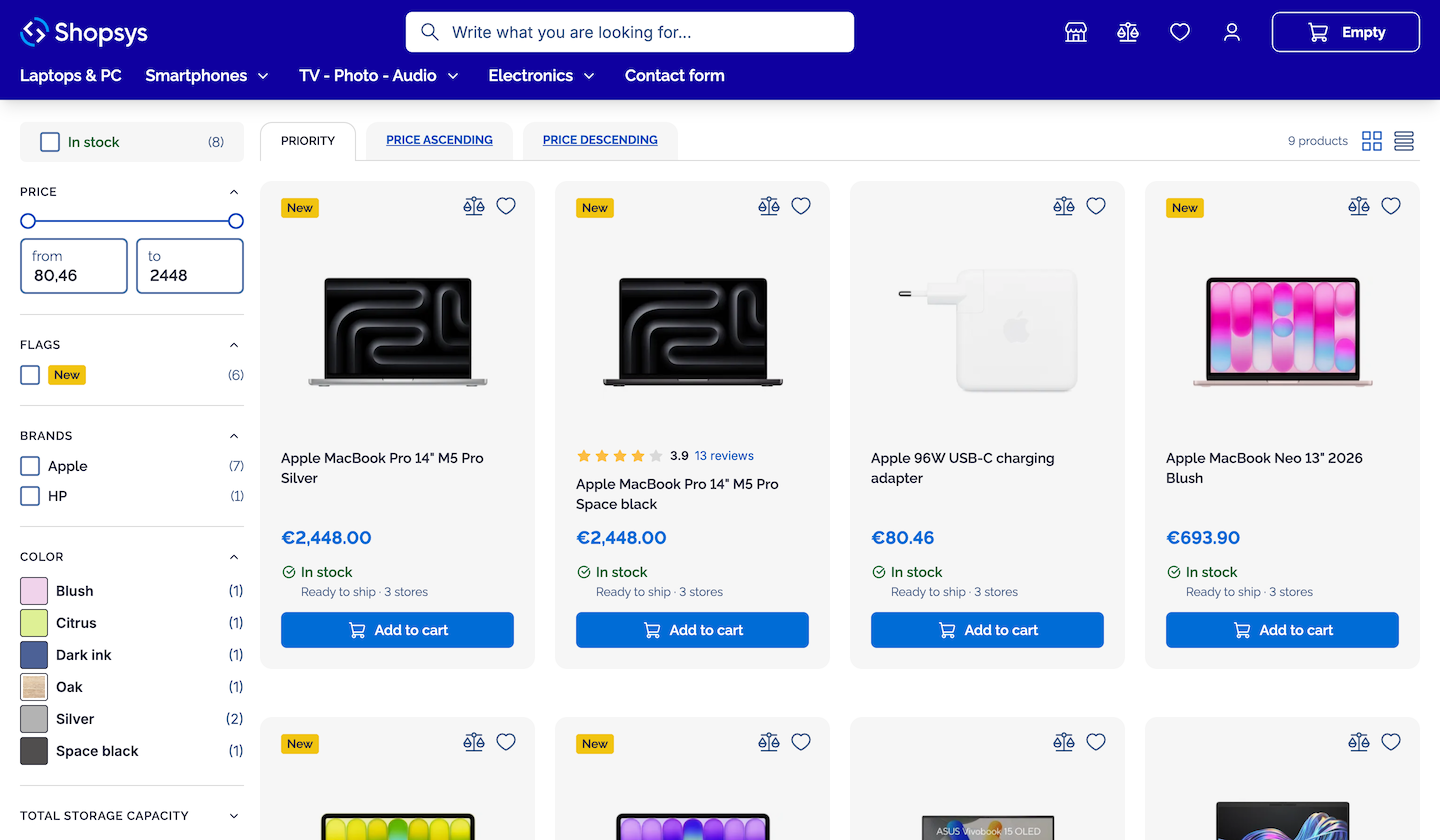
The demo storefront has received a modern look that makes better use of large screens, with a refreshed color palette, iconography and richer demo content. Desktop navigation uses a redesigned mega menu and stays sticky while scrolling, while mobile users get a native-app-like bottom navigation with quick access to home, account, cart, search, and menu. Product listings can be switched between a grid and a compact list view, galleries support native swiping, and product comparison has been redesigned.
Accessibility
The storefront is now easier to use with screen readers and keyboard navigation. Product cards, filters, forms, the cart, navigation, and popups have been made more understandable; contrast-sensitive colors were adjusted, and dialogs announce status updates and return focus to the element that opened them.
Administration
Redesigned order detail
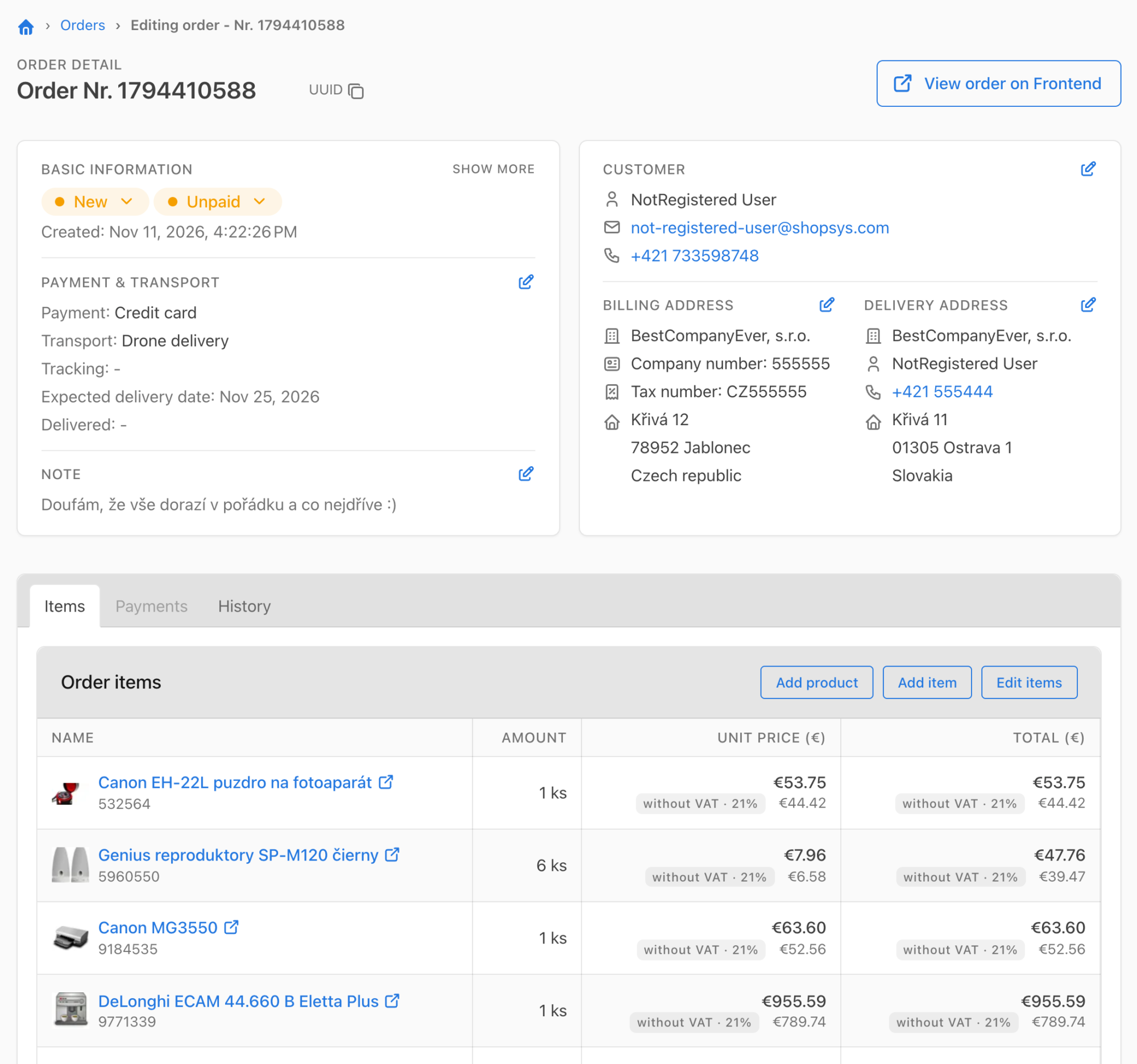
The order detail is no longer one long edit form. Order data is split into separately editable sections – basic data, addresses, transport and payment, notes, withdrawal state, and items – and lazy-loaded tabs with order history and payment transactions. Administrators change only what they are working on, without the risk of accidentally touching unrelated data. GoPay refunds are clearer, and the refunded amount can be corrected manually right from the detail. Projects can add their own sections and tabs without copying the whole template. The order list also got quick status filters.
More comfortable day-to-day work
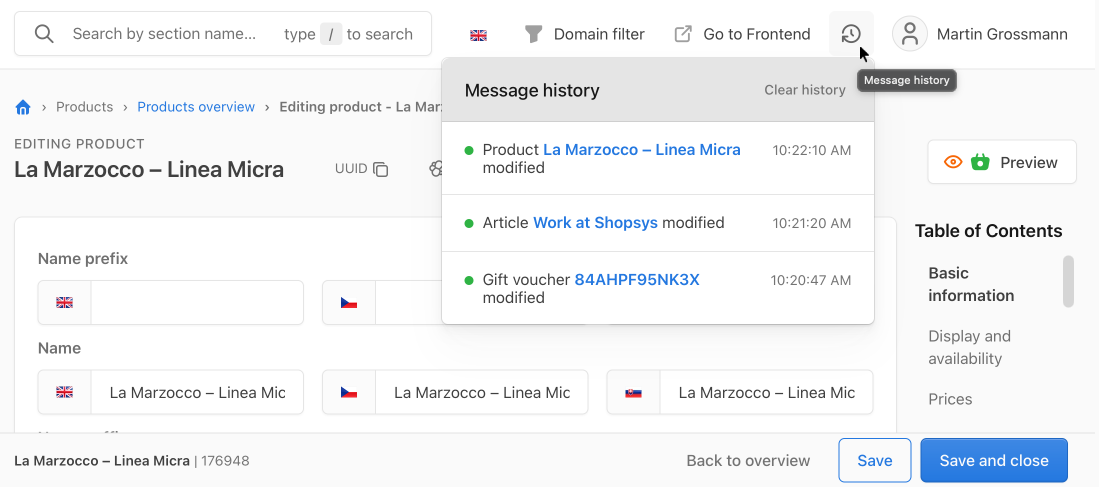
Edit pages now offer a “Save” button that keeps you on the page alongside “Save and close”, and the top-bar icon keeps a history of recent flash messages, so nothing gets missed. Entity log is now enabled by default for transports, payments, customers, administrators, complaints, and withdrawal requests, so every change can be traced back to a person. Order lists have quick status filters, and the cron overview shows the error message of a failed run.
Security and performance
Security hardening
This release includes a broad security review of the platform. The Frontend API limits query depth, complexity, and batch size; payment operations require proof of order ownership; storefront refresh tokens are stored in HttpOnly cookies, and admin routes without explicit access rules are now denied by default. Public forms are protected against spam bots with a honeypot and a rate limit, and MCP queries run only against database views containing exposed columns.
Faster Frontend API and storefront
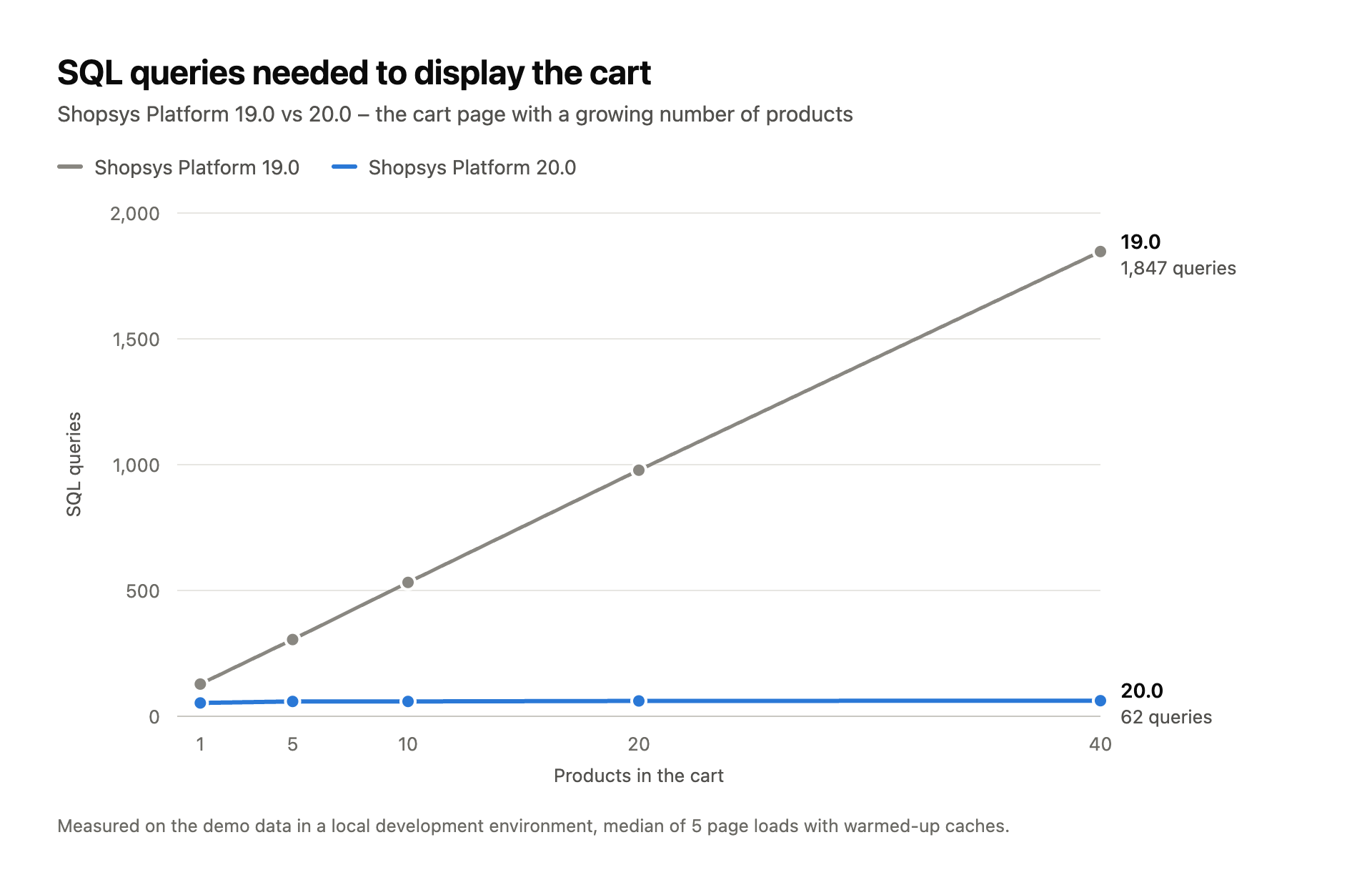
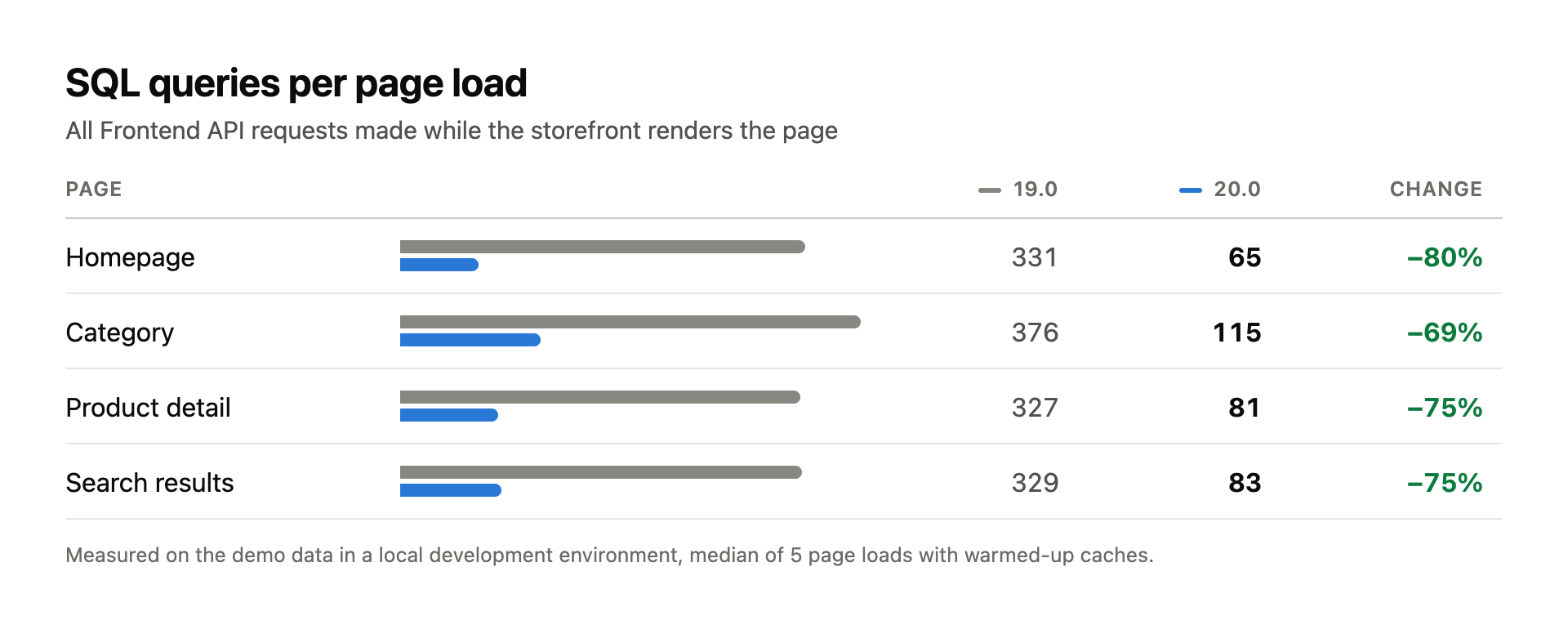
Many N+1 database queries in the Frontend API were replaced with batch loading (slugs, breadcrumbs, filter options, flags, blog categories, cart); frequently used queries are cached in Redis, and product data is now always read from Elasticsearch. Cart and order processing have been optimized, and the storefront loads less JavaScript upfront and fetches less data from the API.
Developer experience
Rsbuild instead of Webpack Encore (#4818)
Administration assets are now built with Rsbuild and Symfony Reprise instead of Webpack Encore, whose ecosystem is winding down. The switch makes the build about 7× faster – a production build of the administration assets now takes around 2.5 seconds. Developers get a fast, modern toolchain and a dev server with hot module replacement, so edited JS and SCSS are applied in the browser without a page reload. The admin JavaScript no longer relies on a globally injected jQuery, and several unused dependencies were dropped.
CRUD controller grows up
The generic CRUD controller now supports create and edit pages, so most administration sections no longer need a custom controller – and many existing ones have already been rewritten to use it. Lists gained domain controls and drag-and-drop reordering; data grid fields can combine properties and be restricted by role; templates and parameters of actions are configurable, and edit pages show the change history of loggable entities.
Ready for AI-assisted development
The project base now ships with guidance for AI coding agents, and the monorepo uses a set of agent skills, for example, for creating admin CRUD controllers. On CI, AI checks verify pull requests against their acceptance criteria in the review environment and audit the changes for security issues.
Cron monitoring (#4654)
Cron modules can now report check-ins to Sentry Cron Monitoring, so teams get notified when a scheduled job stops running, overruns or repeatedly fails – instead of discovering it from stale feeds or an outdated sitemap. Monitoring is opt-in per module and ships enabled for feed and sitemap generation.
Conclusion
Version 20.0 brings features that e-commerce operators have been asking for: product reviews, gift vouchers, additional services, delivery dates on the product detail page, and a smoother checkout. Marketers gain unified SEO attributes, complete structured data and Open Graph, and new GTM events. Administrators work faster thanks to “save and stay”, change history and message history, and developers benefit from a modern asset toolchain, a much more capable CRUD controller and property hooks. All of that comes with a broad security review and a faster Frontend API. For a complete overview of all changes, see the changelog and upgrade notes.
We welcome your questions, ideas, and contributions. Join the discussion on GitHub Discussions, report an issue, or submit a pull request. Every piece of feedback helps us improve the platform and move it forward.
Čtěte také


