

Shopsys
  • E-shopy na míru

    • Customized e-shopsE-shopy pro koncové zákazníky. Postavené na objem, výkon v sezónních špičkách a konverzi.
    • Strategie a design
    • Integrace a měření
    • Platforma
    • Pro koho
    • Inovace a vize
  • Showcase
    • BlogNovinky z vývoje platformy a e-shopy, které na ní stojí.
    • Exec magazínOdborný magazín pro e-commerce manažery s obsahem, který jinde nenajdete.
  • Shopsys

    • CompanyKdo jsme a pro koho stavíme.
    • KariéraOtevřené pozice a jak u nás vypadá práce.

    Partnerství

    • PartnersPro agentury a vývojáře, kteří chtějí stavět na Shopsys Platform.
    • Solution PartnersAgentury, se kterými spolupracujeme.

    PR a výsledky

    • Výroční zprávyVýsledky hospodaření za jednotlivé roky.
  • Contact
Get a Quote

Keep Your Git History Clean with Minimum Effort

Matouš Czerner
For Developers
28. 6. 2018

From the beginning of the development of Shopsys Framework, one of our main priorities has always been to achieve and maintain an understandable, clean and data-rich git history. The last thing that any developer wants is to end up with code that is incomprehensible or extraneous.

In such cases, debugging and understanding the changes in code can become a nightmare. Because of that we really push ourselves to make every change in the repository clear. We have even created our own guidelines for creating good commits.

Making Commits Perfect

Nobody is flawless and creating perfectly atomic commits with relevant information is very difficult to do on the first try. That’s why we use a few git abilities to help us. We are constantly rebasing our branches onto a current master, rewriting our commit messages, moving changes into different commits, and squashing changes into former commits when it makes sense. These actions are usually done several times during the development and code review process.
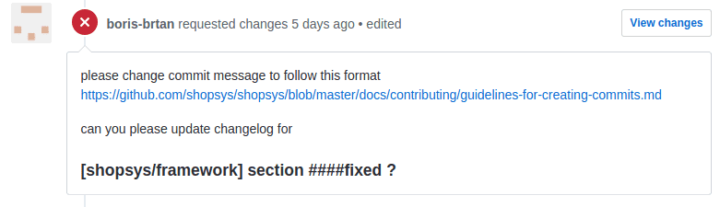
GitHub Code Reviews

While these techniques worked for us really well at first, after publicly releasing Shopsys Framework on GitHub there were a few problems which were brought to our attention.

Firstly, there are pull requests from the community, where we request changes on commit messages and content inside of commits. This can sometimes hurt motivation, and discourage developers from contributing. On the other hand, we want contributions from our community to be understandable and consistent with other commits, too.

Then there is a quality of our code reviews — while GitHub is a great tool for code reviews, it has some difficulty handling changes that are not pullable. So, after rebasing branch onto a new master and changing the order or content of commits, all of the comments and recommendations that have been submitted by reviewers become hidden or get lost entirely. This means that after changing the history during the code review, the reviewer cannot get information about the requested changes any longer and must go through the whole review process again.

!Fixup Solution

While we want contributors to stick primarily to developing for us without spending too much time dealing with commits and history, we generally do not request these types of changes from them. We only request changes of the code, and after approving it for merging into the master, our developers take care of the history themselves.

For the quality of code reviews within our team, we came up with a solution using another great git ability. All changes requested in review are added into the branch as fixup commits.
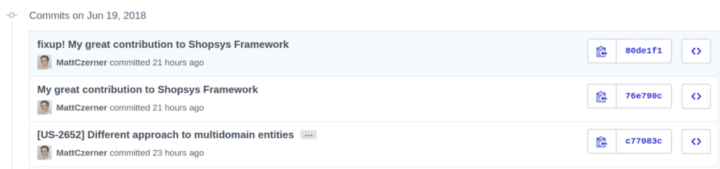
Fixup commits are pointing to other commits that they belong with, so while all the changes after review are done in new commits, they are prepared for rebasing and squashing all relevant changes together. With this approach, we are not forced to rebase and push force our changes into already existing commits during the code review and a reviewer is able to check the new changes easily.

Conclusion

Clean and understandable git history including atomic commits is really important and worth maintaining. On the other hand, high-quality requirements for commits could be a barrier for contributors to be creative. Do not force your community to maintain a git history by themselves internally. For internal pull requests, use fixup commits that make code reviews on GitHub comfortable and squash them all together after changes are approved for merging into the master. You can see how we maintain our history for yourself on our GitHub.

Čtěte také
  • Release highlights 13.0.0
  • Introducing the Shopsys Platform: The Solution for E-Shops that Refuse to Compromise
  • Shopsys Framework Release Highlights v9.1.2
  • Improved running Shopsys Framework in Docker on MacOS using Mutagen
  • Shopsys Framework Release Highlights v9.1.1
18. 11. 2026 Release Highlights 20.0.0
2. 6. 2026 MCP and AI Client Access Now in Shopsys Platform! Ask Your E-shop What You Want to Know
1. 6. 2026 Release Highlights 19.0.0

Get
an Estimate

We will gladly prepare an estimate of your project's time and costs. Please fill out the form below. We will get back to you shortly.

    I take into account that my personal data are processed by Shopsys s.r.o. To get more information read our Privacy policy.
    • Customized e-shops
    • Products
      • Shopsys Platform
      • Shopify Plus
    • Partners
      • Become a Partner
      • Solution Partners
    • Showcase
    • About Us
      • Company
      • For Media
    • Resources
      • Blog
      • Case Studies
      • Ebook
      • EXEC magazine
      • Ecommerce Dictionary
      • Materials For Developers
    • Contact
    Facebook Facebook Twitter Twitter LinkedIn LinkedIn GitHub GitHub Slack Slack
    Get a Quote

    © 2003-2026 Shopsys s.r.o., All rights reserved.
    Privacy Policy | Cookie Settings
    Member of ABUGO Group (Shopsys | Smartsupp | Survio | Reservio )

    Manage Consent
    To provide the best experiences, we use technologies like cookies to store and/or access device information. Consenting to these technologies will allow us to process data such as browsing behavior or unique IDs on this site. Not consenting or withdrawing consent, may adversely affect certain features and functions.
    Necessary Always active
    Necessary cookies are absolutely essential for the website to function properly. These cookies ensure basic functionalities and security features of the website, anonymously.
    Preferences
    The technical storage or access is necessary for the legitimate purpose of storing preferences that are not requested by the subscriber or user.
    Analytics
    The technical storage or access that is used exclusively for statistical purposes. Analytical cookies are used to understand how visitors interact with the website. These cookies help provide information on metrics the number of visitors, bounce rate, traffic source, etc.
    Advertisement
    Advertisement cookies help us provide our visitors with relevant ads and marketing campaigns.
    • Manage options
    • Manage services
    • Manage {vendor_count} vendors
    • Read more about these purposes
    View preferences
    • {title}
    • {title}
    • {title}